- opendesign.foundation
- Compare
- DTK-1660E vs Pen Display 24
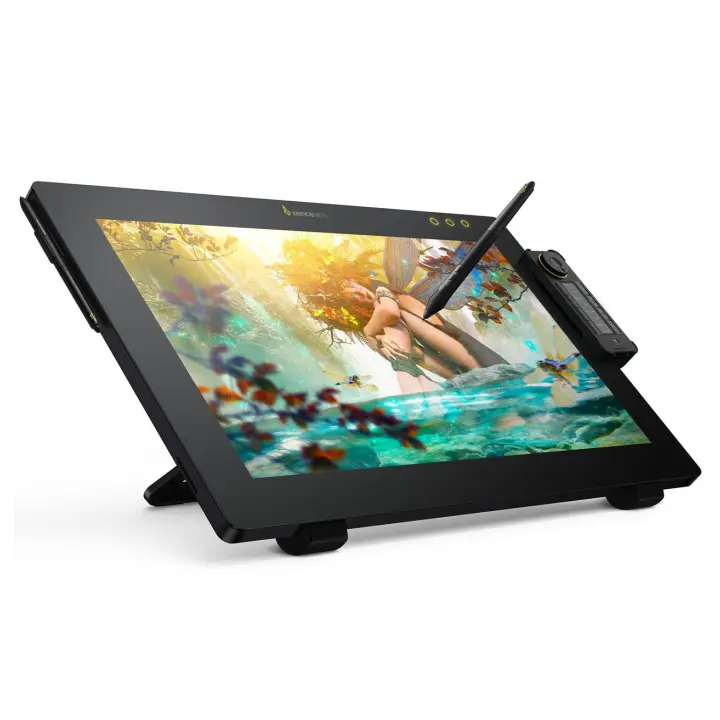
Wacom DTK-1660E vs Xencelabs Pen Display 24
What DTK-1660E does better (1) and where Pen Display 24 wins (4) — every spec side by side.
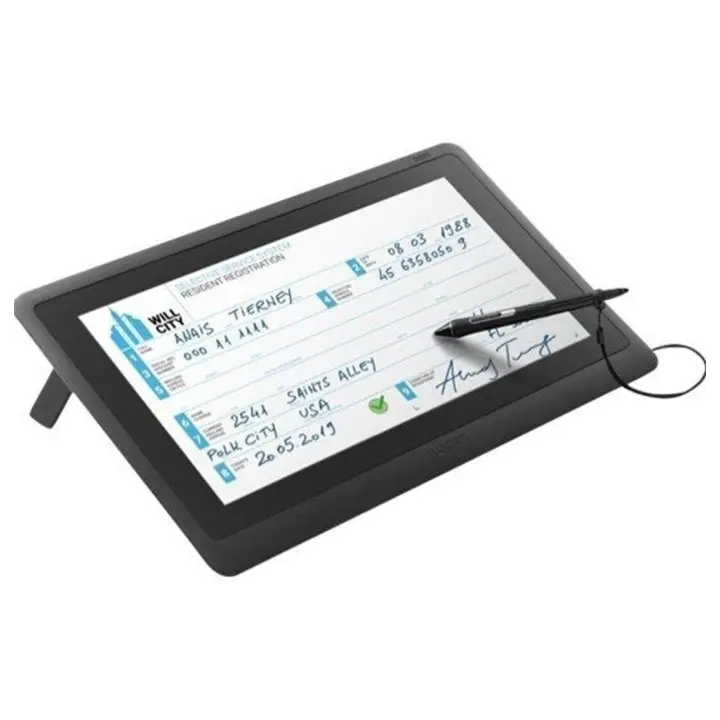
vs
2.3Screen9.3
2.6Pen & controls3.7
5.7Design & ergonomics3.5
Dimensions
Size comparison
DTK-1660EPen Display 24
| DTK-1660E | Pen Display 24 | Difference | |
|---|---|---|---|
| Height | 285 mm | 388 mm | −103 mm |
| Width | 422 mm | 618 mm | −196 mm |
| Depth | 24.5 mm | 34.7 mm | −10.2 mm |
| Weight | 1.9 kg | 6 kg | −4.1 kg |
Drawn to the same scale from the official dimensions (front and side).
Why is DTK-1660E better than Pen Display 24?
- Weight1.9 kg vs 6 kg3.2×
Why is Pen Display 24 better than DTK-1660E?
- Pixel density142 ppi vs 185 ppi+30%
- Brightness (typical)210 nits vs 330 nits+57%
- Active area (surface)666 cm² vs 1,563 cm²2.3×
- Screen size15.5″ vs 23.8″+54%
Specifications
Side by side
| Display | ||
| Screen size | 15.5″ | 23.8″ |
| Resolution | 1920 × 1080 | 3840 × 2160 |
| Resolution class | Full HD | 4K UHD |
| Pixel density | 142 ppi | 185 ppi |
| Aspect ratio | 16:9 | 16:9 |
| Panel type | IPS | — |
| Brightness (typical) | 210 nits | 330 nits |
| Contrast ratio (static) | 1,000:1 | — |
| Response time | 25 ms | — |
| Anti-glare / matte screen | Yes | — |
| Pen & controls | ||
| Pressure levels | 8,192 | 8,192 |
| Tilt recognition | — | ±60° |
| Active area | 344.2 × 193.6 mm | 527 × 296.5 mm |
| Active area width | 344 mm | 527 mm |
| Active area height | 194 mm | 296 mm |
| Active area (surface) | 666 cm² | 1,563 cm² |
| Pen resolution | — | 5,080 lpi |
| Pen accuracy (centre) | ±0.5 mm | — |
| Battery-free pen | — | Yes |
| Express keys | — | 3 |
| Multi-touch | No | No |
| Connectivity | ||
| USB-C video input (one cable) | No | — |
| HDMI inputs | 1 | — |
| Wireless connection | No | — |
| Compatibility | Windows, macOS | Windows, macOS, Linux |
| Design & ergonomics | ||
| Weight | 1.9 kg | 6 kg |
| Width | 422 mm | 618 mm |
| Height | 285 mm | 388 mm |
| Depth | 24 mm | 35 mm |
Related comparisons
 vs
 Wacom DTK-1660EvsHuion Kamvas Pro 22
3.84.2
vs
 Wacom DTK-1660EvsHuion Kamvas Pro 20
3.84.0
 vs
Wacom Cintiq 22vsWacom DTK-1660E
3.73.8
 vs
 Xencelabs Pen Display 16vsXencelabs Pen Display 24
9.55.4
 vs
Wacom Cintiq 24vsXencelabs Pen Display 24
6.05.4
vs
 Xencelabs Pen Display 24vsHuion Kamvas Pro 27
5.45.6